Classic Fork earns a small commission from Amazon and other affiliate links at no extra cost to you, helping us keep our content free and honest.
5 Vintage Soups & Stews That Got Families Through Wartime
Time Period:
Meal Type:
Picture this. It’s wartime, and food is scarce.
Families gather around the dinner table, stretching ingredients as far as they’ll go to make a hearty, filling meal.
Soups and stews became a lifesaver. Simple, nourishing, and made with whatever was available.
These five vintage recipes helped families survive tough times, and they might just deserve a comeback today.
Soups and stews did more work than any other category of wartime meal. They turned a single bone or a scrap of meat into dinner for six, and made root vegetables feel like a feast.
Every country had its version of the survival soup. Britain had Woolton Pie broth, America had Victory Garden stew, Russia had shchi, and France had vegetable-and-bone pot-au-feu simmered for hours. For the specifically British story, our guide on British wartime soup traditions goes deeper.
Why Soups and Stews Ruled the Wartime Kitchen
Three reasons put soup on almost every wartime table.
They stretched meat further than any other cooking method. A bone with a few scraps clinging to it flavored an entire pot once simmered for 3 or 4 hours.
Ration books in Britain allocated just 1 shilling 2d of meat per week per person by 1942. Soups and stews made that amount feel substantial.
They absorbed whatever vegetables you had. Wilted carrots, sprouting potatoes, the outer leaves of a cabbage, the tops of celery. All of it went into the pot.
Nothing was wasted. Wartime cooks measured ingredients in handfuls, not cups.
They fed a family on a single fuel allowance. Gas and coal were also rationed during WWII. A slow-simmering one-pot meal used less fuel than baking, frying, or roasting separate dishes.
The Ministry of Food specifically recommended one-pot cooking in its BBC Kitchen Front broadcasts for exactly this reason.
For the rationing context behind these recipes, the Ministry of Food ration guide lays out weekly allowances in detail.
Vintage Wartime Soups & Stews
Think you could make dinner with no fresh meat, limited veggies, and just a handful of pantry staples? That’s exactly what families had to do during wartime, and their secret weapon was soups and stews. These five vintage recipes are a testament to creativity, resilience, and making the most of what you have. Would you try them today?

Embrace the nostalgia and wholesome goodness of yesteryears with our Victory Garden Stew. This hearty and nutritious stew is a tribute to the victory gardens of the World Wars, where communities came together to grow their own food. Perfect for chilly evenings, this stew combines fresh garden vegetables with tender meat, creating a comforting meal that warms both body and soul.

Few dishes evoke the spirit of resilience and resourcefulness like Shchi, the classic Russian cabbage soup that sustained countless families through wartime hardship. With its fragrant aroma of stewed cabbage and the heartiness of root vegetables, this traditional soup delivers comforting warmth in every spoonful.
Although the ingredients are simple and humble, the depth of flavor and rich satisfaction found in a single bowl of Shchi made it a staple on Soviet tables during World War II.
Today, preparing it is not only a culinary experience but also a tribute to the resourcefulness and ingenuity that people demonstrated during challenging times.
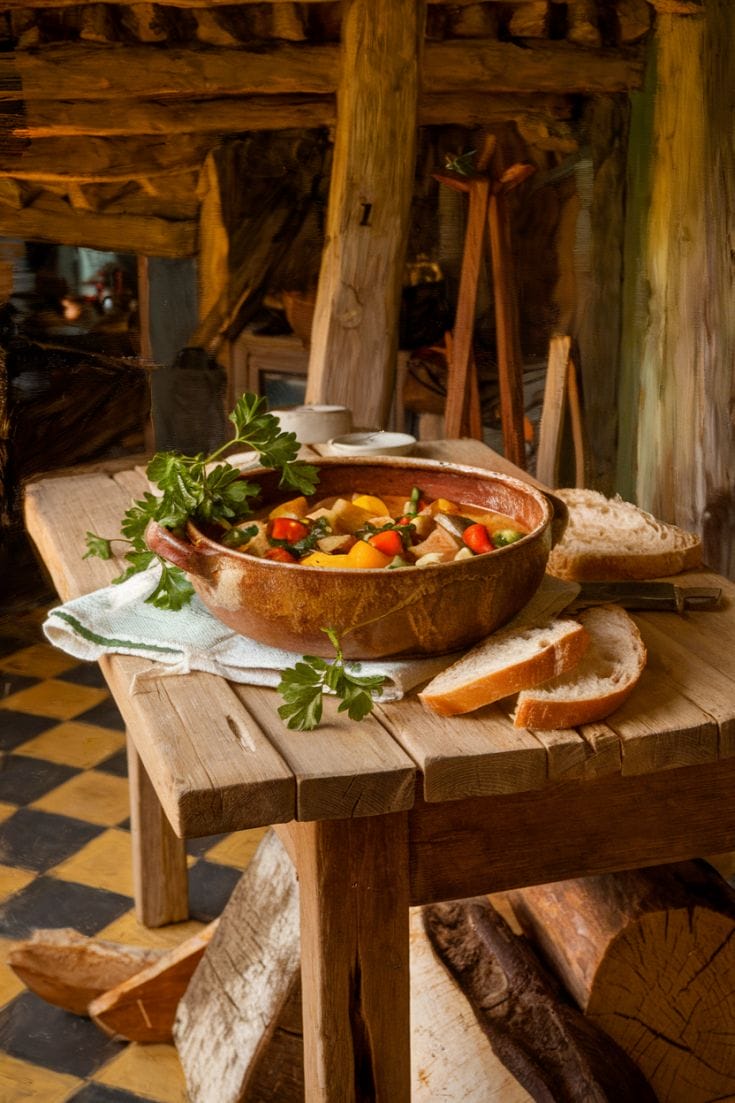
During World War II, families across the United States relied on “Victory Gardens” to supplement their diets with homegrown vegetables, as rationing limited access to many staple ingredients.
This hearty vegetable stew draws from that era’s spirit of resilience and resourcefulness, turning simple backyard produce into a comforting meal.
It’s a one-pot dish that makes the most out of what’s available—perfectly adaptable to what’s in season—and a warming reminder of how home cooking can lift the soul during challenging times.

Step back into the 1940s with this hearty and resourceful dish. Barley and Vegetable Hotpot was a staple during WWII when rationing forced families to create nourishing meals from humble ingredients. This hotpot is a celebration of simplicity, warmth, and the ingenuity of home cooks during challenging times.

During World War II, rationing forced people to get creative with limited ingredients. Lentil stew became a staple because it was hearty, nutritious, and affordable. Today, this dish is a delicious way to embrace history while enjoying a warm, comforting meal.
How to Cook These Soups Like a Wartime Cook Would
A few techniques separate authentic wartime soup from modern soup.
Simmer low and slow. Wartime cooks left pots on the back of the range for hours. Modern slow cookers on low for 6 to 8 hours replicate this beautifully.
Use the bones. Don’t buy boneless cuts. A single bone-in cut of chicken or beef adds more flavor than twice the meat without a bone.
Thicken with what you have. Wartime soups rarely used cornstarch. Leftover bread, oatmeal, mashed potato, or a handful of split peas thicken a broth just as well.
Season at the end. Salt and pepper were rationed in Britain. Cooks added a pinch only at serving time to avoid waste.
Stretch with barley or pulses. A handful of pearl barley or lentils thrown into any soup turns it into dinner.
Wartime Soup Pantry Staples
A few ingredients show up across nearly every wartime soup and stew recipe.
Pearl barley is the unsung hero of British wartime soups. It adds body, protein, and satiety.
Dried split peas and dried lentils were the wartime meat stretchers. Both keep for years sealed.
Bay leaves and whole peppercorns were the only seasoning most households could afford to keep on hand.
A good enameled Dutch oven (this enameled Lodge is everything) handles the long slow simmer better than a thin stockpot. A sturdy ladle for serving, and a wooden spoon (this beech-wood set has lasted me a decade) for stirring, round out the kit.
Reprinted Marguerite Patten wartime cookbooks include dozens of original Ministry of Food soup recipes that didn’t make this short list.
Keep Exploring Wartime Cooking
If soup pulled you in, a few more directions from here.
The wartime dinner recipes roundup covers the main-dish side of the table.
The wartime recipes from different countries roundup breaks down how each country’s soup culture adapted to rationing.
For the pepper pot soup itself, our Philadelphia pepper pot recipe is one of the site’s top-traffic pages.
And the cooking history timeline puts one-pot cooking into its longer historical arc.
FAQ
What soups did people eat during WW2?
British families leaned on scotch broth, pea and ham soup, cabbage soup, vegetable marrow soup, and barley-and-vegetable hotpot.
American families cooked Victory Garden vegetable stews, Philadelphia pepper pot, and one-pot chicken-and-dumplings.
Soviet and Eastern European families relied heavily on shchi (cabbage soup) and borscht.
How did wartime cooks stretch a single bone across a whole pot?
They simmered it for 3 to 6 hours, which extracted collagen and marrow into the broth.
Once the broth was rich, they added root vegetables, pearl barley, or lentils to turn it into a full meal.
The same bone could often be reused for a second batch of broth the following day.
Are wartime soups healthy?
Yes. Wartime soups are high in fiber, vegetable-heavy, and low in added fat or sugar.
The long simmering extracts minerals from bones and vegetables that modern quick-cook broths miss entirely.
What is a British wartime stew?
A British wartime stew is typically a long-simmered one-pot dish built on root vegetables, a small amount of meat or a bone, pearl barley or lentils, and whatever greens were on hand.
Lancashire hotpot, Irish stew, and barley-and-vegetable hotpot are the most common examples.
Can I make these soups in a slow cooker?
Absolutely. Slow cookers replicate the back-of-the-range simmer that wartime cooks used.
Most of these recipes work beautifully on low for 6 to 8 hours, or high for 3 to 4 hours.

Maggie Hartwell
Hi there, I’m Maggie Hartwell, but you can call me Maggie—the apron-clad foodie behind Classic Fork! I created Classic Fork because I’m convinced food has a way of telling stories that words can’t. So, grab a fork and dig in. The past never tasted so good!


