Classic Fork earns a small commission from Amazon and other affiliate links at no extra cost to you, helping us keep our content free and honest.
6 Wartime Recipes from Different Countries [How the World Ate During War]
Time Period:
Meal Type:
Could you survive on a wartime diet?
From powdered eggs to bread made with mystery ingredients, people around the world had to get incredibly creative with their meals.
But some of these dishes were surprisingly delicious, and a few even stuck around.
Take a culinary time-travel tour with these six wartime recipes from different countries and decide: would you eat them today?
Every country at war ate differently. Rationing rules, local crops, occupation pressures, and cultural food habits all shaped what showed up on the dinner table.
What follows is a working map of who ate what, and why. The recipes in the list below are the ones that survived the war and still get cooked today.
How Rationing Shaped Each Country’s Table
Britain
Britain had the tightest civilian rationing of any major WWII country. Meat, butter, sugar, eggs, cheese, and tea were all rationed from 1940 onward.
The Ministry of Food ran a daily BBC radio program called The Kitchen Front to teach households how to cook with minimal ingredients.
Signature dishes from the British wartime table include Woolton Pie, the national loaf, bubble and squeak, and mock cream on sponge cakes.
United States
American rationing was lighter than British. Sugar, coffee, meat, and dairy had ration stamps, but shelves rarely emptied completely.
The Victory Garden movement transformed American cooking. By 1944, around 20 million families grew their own vegetables, and stew-heavy one-pot dishes became the norm.
Signature dishes include victory garden vegetable stew, crazy cake, mock apple pie (made with crackers instead of apples), and wartime meatloaf stretched with oatmeal.
Germany
German rationing started in 1939 and got progressively harsher. By 1944, civilian rations were half of pre-war levels.
Households leaned on root vegetables, turnips in particular, and ersatz products: chicory coffee, margarine made from whale oil, and bread cut with sawdust in the worst years.
The surviving signature recipe is German ersatz coffee, called muckefuck, made from roasted chicory root.
Soviet Union
Soviet rationing was extreme, especially on the Eastern Front and during the Siege of Leningrad.
Cabbage, buckwheat, potatoes, and whatever protein was available became the backbone of survival cooking.
Shchi, the centuries-old Russian cabbage soup, became the defining wartime meal. A bowl with a scrap of meat or bone was dinner for an entire family.
France (Occupied)
Occupied France faced severe shortages. German requisitioning stripped most of the country’s food supply.
Pain de guerre, the wartime bread made of whatever flour stretchers were available, replaced the traditional baguette. Chicory coffee and vegetable-heavy soups filled the gaps.
Many families grew hidden gardens to dodge German patrols and kept chickens discreetly for eggs.
Italy
Italian rationing started later but hit hard. Pasta was still available but made with corn flour or chestnut flour instead of wheat.
Minestrone stretched with beans and whatever greens grew locally became the dominant wartime dish. Polenta stepped in for bread.
For deeper context on British rationing specifically, the Ministry of Food ration guide lays out the numbers week by week.
Wartime Recipes from Different Countries
War changes everything—including the way people eat. With food shortages, strict rationing, and creative substitutions, families and soldiers alike had to make do with whatever was available. But what did wartime meals look like in different parts of the world? From British "mock" dishes to American ration cakes and Japanese rice-saving strategies, these six wartime recipes reveal the incredible resilience (and ingenuity) of people during conflict.

During WW2, food rationing made simple, hearty recipes essential. This rye bread captures the resilience and resourcefulness of that time. Its dense texture and earthy flavor make it not just a slice of bread but a slice of history.

There’s something profoundly comforting about the aroma of freshly baked bread, and when that bread is infused with the delicate sweetness of chestnut flour, the sensory experience becomes truly remarkable.
During World War II, resourcefulness in the kitchen was not just a virtue—it was a necessity. Wheat flour was often scarce or heavily rationed, leading French bakers and home cooks to turn to alternatives like chestnut flour, a staple in certain regions of France for centuries.
This French Chestnut Flour Bread pays homage to those inventive wartime bakers, blending tradition with innovation to yield a loaf that’s subtly nutty, tender, and entirely unforgettable.

During World War 2, real coffee beans were hard to find. People used roasted barley, chicory root, or other grains as coffee substitutes.
Muckefuck was not rich or strong like true coffee. It was still comforting and offered a small pleasure in a difficult era.
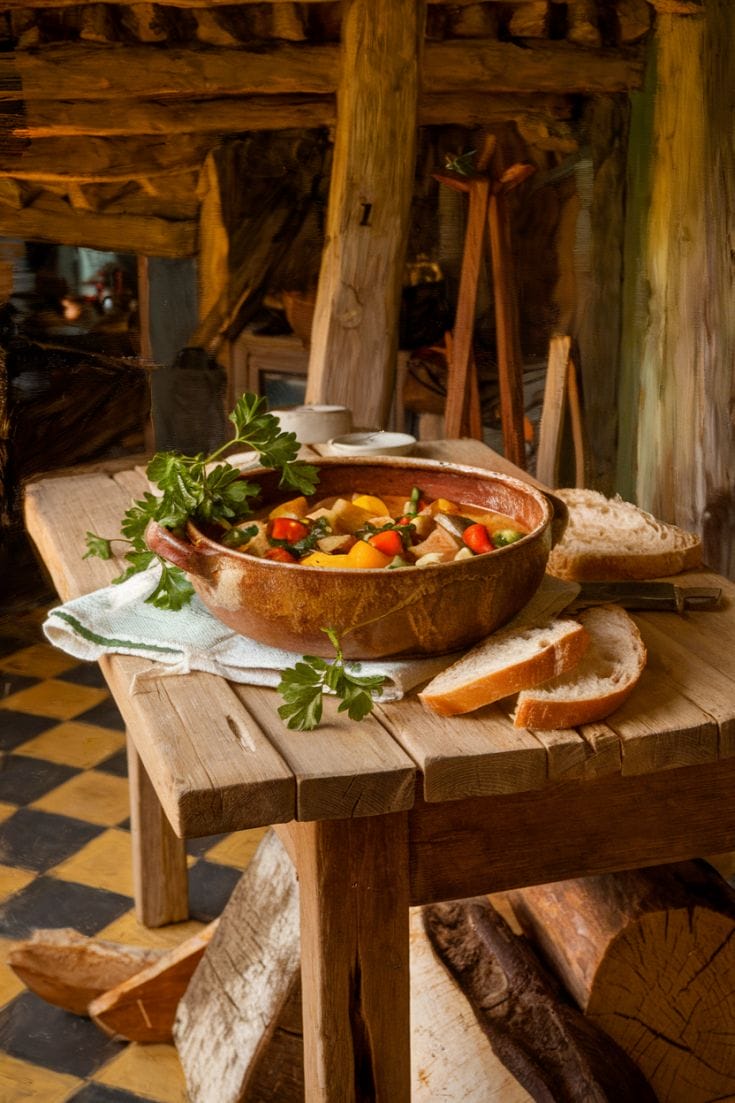
During World War II, families across the United States relied on “Victory Gardens” to supplement their diets with homegrown vegetables, as rationing limited access to many staple ingredients.
This hearty vegetable stew draws from that era’s spirit of resilience and resourcefulness, turning simple backyard produce into a comforting meal.
It’s a one-pot dish that makes the most out of what’s available—perfectly adaptable to what’s in season—and a warming reminder of how home cooking can lift the soul during challenging times.

During the trying times of World War II, British households had to get creative in the kitchen due to strict rationing. One delightful result of this ingenuity was Carrot Marmalade.
This sweet and tangy spread made from humble carrots brought a touch of brightness to the breakfast table, substituting scarce fruits like oranges. Today, we recreate this classic recipe to bring a slice of history to your pantry.

Few dishes evoke the spirit of resilience and resourcefulness like Shchi, the classic Russian cabbage soup that sustained countless families through wartime hardship. With its fragrant aroma of stewed cabbage and the heartiness of root vegetables, this traditional soup delivers comforting warmth in every spoonful.
Although the ingredients are simple and humble, the depth of flavor and rich satisfaction found in a single bowl of Shchi made it a staple on Soviet tables during World War II.
Today, preparing it is not only a culinary experience but also a tribute to the resourcefulness and ingenuity that people demonstrated during challenging times.
What These Recipes Share in Common
Across six countries and two continents, a few patterns hold.
Root vegetables carried the meal. Potatoes, carrots, beets, turnips, and cabbage appear in almost every wartime recipe from every country.
These crops grew easily, stored well, and weren’t rationed anywhere.
Bread changed everywhere. British national loaf, German sawdust bread, French pain de guerre, Italian polenta. Every country had a wartime bread story.
Ersatz drinks replaced coffee and tea. Chicory coffee in Germany and France, barley coffee in Italy, weak tea in Britain.
Stews stretched meat. A single bone or scrap of meat could flavor an entire pot of soup or stew to feed four or six people.
That’s why wartime recipes still translate so well to modern slow-cooker and one-pot cooking.
Pantry Staples for International Wartime Cooking
A few ingredients cover recipes from multiple wartime kitchens.
Chicory root coffee covers both the German ersatz and French chicory-coffee traditions. It has a surprisingly pleasant, slightly sweet roasted flavor.
Buckwheat groats are the backbone of Russian wartime cooking. They keep forever sealed.
Polenta corn meal is how most of Italy ate through the worst of wartime.
A sturdy enameled casserole dish handles the long, slow cooking most of these recipes call for.
For the big-picture history, reprinted WWII home front cookbooks cover the civilian side of wartime eating across multiple countries.
Keep Exploring Wartime Cooking
For deeper dives into each country’s story, a few internal threads worth following.
The wartime dinner recipes roundup covers both British and Soviet wartime main dishes side by side.
The wartime dessert recipes roundup focuses on the baking side, which varied dramatically by country.
The ersatz coffee guide goes deeper on the German and American coffee substitute culture.
And the cooking history timeline puts wartime cooking into a longer global arc.
FAQ
Which country had the strictest rationing in WWII?
Britain had the tightest and longest-running civilian rationing of any major Allied or Axis power. Rationing began in 1940 and didn’t end until 1954.
In occupied zones and besieged cities like Leningrad, actual food availability was even worse than British rationing, but it wasn’t coordinated as a civilian program.
What were the most common wartime ingredients across countries?
Potatoes, cabbage, and root vegetables were the universal wartime staples. They grew in backyard gardens, stored through winter, and weren’t rationed anywhere.
Bread filled in the gaps. Every country had a wartime version of bread made with whatever flour stretchers were available.
What did Germans eat during WWII?
German wartime diets leaned on turnips, root vegetables, rye bread, and ersatz products. Chicory coffee called muckefuck replaced real coffee almost entirely by 1942.
In the final years of the war, civilian bread was often cut with fillers including sawdust, and margarine was sometimes made from whale oil or petroleum byproducts.
What did people eat in occupied France during the war?
Occupied French families ate chicory coffee, pain de guerre bread, and vegetable soups made with whatever local produce remained after German requisitioning.
Many households kept hidden gardens and discreet chickens to supplement official rations.
Are wartime recipes worth cooking today?
Yes. Wartime recipes are naturally low-waste, vegetable-heavy, and built around pantry staples that keep.
They also hit modern dietary preferences almost by accident: most are lower in sugar and meat than standard modern recipes.

Maggie Hartwell
Hi there, I’m Maggie Hartwell, but you can call me Maggie—the apron-clad foodie behind Classic Fork! I created Classic Fork because I’m convinced food has a way of telling stories that words can’t. So, grab a fork and dig in. The past never tasted so good!


