
Home > Single Recipes > Victorian Seed Cake Loaf [The Forgotten Tea-Time Treat]
Last Updated: April 18, 2026
Classic Fork earns a small commission from Amazon and other affiliate links at no extra cost to you, helping us keep our content free and honest.
Victorian Seed Cake Loaf [The Forgotten Tea-Time Treat]
Time Period:
Meal Type:
Core Ingredient:
Cuisine:
Cooking Time: 1 hour
Prep Time: 15 minutes
Total Time: 1 hour 30 minutes
Servings: 10 slices
Calories: Around 320 per slice
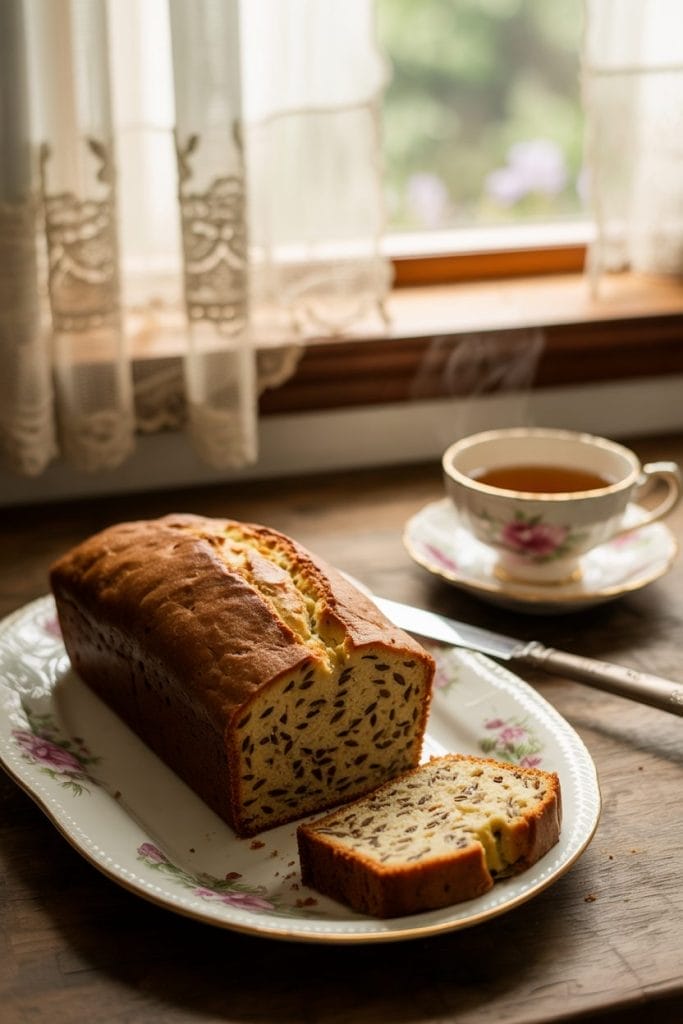
Seed cake is one of those forgotten Victorian recipes that deserves a comeback. Buttery, slightly nutty from caraway seeds, and built to be eaten with a strong cup of tea.
I baked one after reading about it in a Charles Dickens novel where two characters argue about the proper way to slice it. Then I understood why.
Firm but moist crumb. Subtle anise-like flavor from the caraway. Better the next day. Genuinely a treat.
What Is Victorian Seed Cake?
Victorian seed cake is a buttery loaf cake flavored with caraway seeds. The seeds give a subtle, slightly licorice-anise flavor and a faint crunch in every bite.
It is denser than a sponge cake and lighter than a fruit cake. The texture is somewhere between pound cake and sturdy butter loaf.
A Quick History of Seed Cake
Seed cake appeared in English cookbooks as early as the 1500s, but the Victorians made it iconic. By the 1800s, it was a fixture at country teas, harvest celebrations, christenings, and even funerals.
Caraway seeds were thought to aid digestion, which made the cake a perfect end to heavy meals. The Victorians were big on practical baking, and seed cake checked every box.
Jane Austen mentions it in her letters. Charles Dickens references it in “Bleak House.” George Eliot’s characters serve it. If a Victorian novel had a tea scene, seed cake was probably on the table.
It was considered a “plain but proper” cake, the kind a Victorian housewife could make for the vicar’s visit or carry to a church bake sale. Honest, modest, and reliably delicious.
Times and Yield
- Prep time: 15 minutes
- Bake time: 55-65 minutes
- Total time: ~1.5 hours
- Yield: 1 loaf (~10 slices)
- Difficulty: Beginner
Equipment
- 8×4 inch loaf tin
- Mixing bowl (this Pyrex glass set has been on my counter forever)
- Whisk (this OXO balloon whisk takes a beating) or electric hand mixer
- Measuring cups (this Pyrex glass set has held up for years) and spoons
- Cooling rack (this Wilton 3-tier rack saves my counter on bake days)
- Parchment paper (Reynolds Kitchens unbleached is what I keep on the shelf) (optional, for easy lift-out)
Ingredients
- 1 cup (225g) unsalted butter, softened
- 1 cup (200g) granulated sugar
- 4 large eggs, room temperature
- 2 cups (250g) all-purpose flour
- 2 tsp baking powder
- 2 tbsp whole caraway seeds
- 2 tbsp whole milk
- Pinch of salt
Instructions
Step 1: Preheat and Prep
Heat your oven to 350°F (175°C). Grease the loaf tin or line it with parchment.
Step 2: Cream Butter and Sugar
In a large mixing bowl, cream the softened butter and sugar together for 3 to 4 minutes until pale and fluffy.
This is the most important step. Properly creamed butter and sugar give the cake its rise and tender crumb.
Step 3: Add Eggs One at a Time
Crack in the eggs one at a time, beating well after each addition.
If the batter looks curdled, do not panic. A spoonful of flour from your dry ingredients will bring it back together.
Step 4: Add Dry Ingredients
Sift in the flour, baking powder, and salt. Mix gently until just combined.
Do not overbeat. Stop the moment the flour disappears.
Step 5: Stir in Caraway Seeds and Milk
Add the caraway seeds and milk. Fold in gently with a spatula until evenly distributed.
Step 6: Bake
Pour the batter into the loaf tin. Smooth the top with a spatula.
Bake for 55 to 65 minutes. A toothpick in the center should come out clean. Tent with foil after 40 minutes if the top is browning too fast.
Step 7: Cool and Slice
Cool in the tin for 10 minutes, then transfer to a wire rack.
Slice when fully cooled. The flavor and texture deepen overnight, so try one slice fresh and save the rest for tomorrow.
Tips and Troubleshooting
- Sunken middle? Either too much liquid or oven door opened too early. Stick to the recipe and resist peeking.
- Caraway seeds sinking to the bottom? Toss them in 1 tbsp of the flour before folding in. The flour coating helps suspend them.
- Dense, heavy texture? Butter not creamed enough. Cream until truly pale and fluffy, no shortcuts.
- Bitter aftertaste? Old caraway seeds. They go stale fast. Buy fresh.
Variations Worth Trying
- Lemon and caraway: Add 1 tbsp lemon zest with the dry ingredients. The citrus balances the savory caraway beautifully.
- Anise instead: Swap caraway for whole anise seeds for a sweeter, more licorice-forward flavor. Not traditional but excellent.
- Dried fruit version: Stir in ½ cup currants or sultanas alongside the caraway.
- Madeira-soaked: Brush the warm cake with 2 tbsp Madeira or sweet sherry. The historical fancy-version finish.
How to Serve It
The Victorian way: thick slice, a dab of butter, a small glass of Madeira or sherry, and a strong cup of black tea.
Modern: with afternoon coffee, alongside a sharp cheese plate, or toasted lightly with a smear of marmalade.
How to Store
Wrap in parchment or store in an airtight tin. Stays fresh for 5 to 7 days at room temperature.
Freezes well too. Slice and freeze in individual portions for up to 3 months.
Frequently Asked Questions
What does Victorian seed cake taste like?
Buttery, slightly sweet, with a subtle anise-licorice flavor from the caraway seeds. The texture is dense and tender, somewhere between pound cake and butter loaf.
Why caraway seeds?
Caraway was cheap, widely available across Europe, and believed to aid digestion. Victorians valued both flavor and function in their baking.
Is seed cake the same as poppy seed cake?
No. Poppy seeds are tiny, mild, and add crunch only. Caraway seeds have a distinct savory anise flavor that defines this cake. Different cakes entirely.
Why is seed cake mentioned so often in Victorian novels?
It was considered “plain but proper” – the cake of choice for ordinary social occasions like vicar visits, weddings, christenings, and even funerals. Authors used it as shorthand for genteel domestic life.
Can I make seed cake without caraway?
Yes, but then it is just a plain butter loaf. The caraway is what makes it seed cake. Try anise or fennel for variation, but stay seedy.
Related Victorian Recipes
- Victorian Gingerbread — the spiced, sticky molasses (Grandma's Unsulphured is the only kind I trust) loaf
- Victorian Milk Bread — the pillowy soft tea-time bread
- Sally Lunn Bun — the buttery brioche-style loaf
- 5 Forgotten Victorian Bread Recipes — the full roundup
Nutrition
Approximate nutrition per slice:
- Calories: 320
- Fat: 18g
- Carbs: 34g
- Sugar: 18g
- Protein: 5g
- Fiber: 1g

Maggie Hartwell
Hi there, I’m Maggie Hartwell, but you can call me Maggie—the apron-clad foodie behind Classic Fork! I created Classic Fork because I’m convinced food has a way of telling stories that words can’t. So, grab a fork and dig in. The past never tasted so good!


