Home > Single Recipes > Pepper Pot Soup That Fed a Revolution – A Bold Taste from the Colonial Days
Last Updated: April 18, 2026
I Made These FREE Vintage Recipe Tools JUST For You
This recipe was created with help from AI tools and carefully reviewed by a human. For more on how we use AI on this site, check out our Editorial Policy. Classic Fork earns a small commission from Amazon and other affiliate links at no extra cost to you, helping us keep our content free and honest.
Pepper Pot Soup That Fed a Revolution – A Bold Taste from the Colonial Days
Time Period:
Meal Type:
Cooking Time: 2 hours
Prep Time: 30 minutes
Total Time: 2 hours 30 minutes
Servings: 6
Calories: 310 per serving (approx.)
This is the soup that kept George Washington’s army alive through the brutal winter of 1777 at Valley Forge. Thick, peppery, and built from whatever scraps the cooks could find.
I made it on a freezing January night thinking it would be a curiosity. It ended up replacing my usual beef stew for the rest of the month.
The “pepper” in pepper pot is real. Expect a slow, building heat that wakes you up by the third spoonful.

What Would You Cook in Wartime?
Step back in time and discover what you could make with limited wartime rations
What Is Pepper Pot Soup?
Pepper pot soup is a thick, spicy stew of meat, root vegetables, and hot peppers, slow-simmered until everything melts together. It originated in West Africa and the Caribbean, then traveled to colonial America with enslaved cooks.
The colonial American version is sometimes called Philadelphia Pepper Pot. It became a city street-food staple by the 1800s, ladled out of huge cauldrons by vendors known for their distinctive cry of “Pepper pot, all hot!”
The dish is famously tied to the Revolutionary War. Legend says a Continental Army cook invented it at Valley Forge using whatever scraps remained, including tripe, salted meat, and bruised vegetables. Whether or not the legend is fully accurate, it stuck.
A Quick History of Pepper Pot Soup
The soup’s roots are West African and Caribbean. Enslaved Africans brought it to the Americas, where it adapted to local ingredients. In Jamaica, it kept callaloo greens and Scotch bonnet peppers. In Philadelphia, it picked up beef and root vegetables.
By the late 1700s, pepper pot was firmly American. Soldiers ate it during the Revolutionary War. After the war, freed and enslaved Black women in Philadelphia sold it from corner pots. It was cheap, spicy, filling, and unforgettable.
The Campbell Soup Company canned a version starting in 1899, which kept the recipe alive into the 20th century. The canned version was discontinued in 2010, but the homemade tradition is still going.
Times and Yield
- Prep time: 15 minutes
- Cook time: 2 hours
- Total time: 2 hours 15 minutes
- Servings: 6 bowls
- Difficulty: Easy, but needs time
Equipment
- Large soup pot or Dutch oven (This one is gorgeous) (5-quart minimum)
- Wooden spoon (Love environmet & style? Get this bamboo spoon set)
- Sharp knife (Chefs envy this knife set)
- Cutting board (My favorite cutting board set)
- Ladle (This wooden ladle is great)
- Measuring cups and spoons
Ingredients
- 1 lb beef stew meat (or tripe for full colonial authenticity)
- 2 tbsp cooking oil or lard
- 1 medium onion, diced
- 2 cloves garlic, minced
- 2 carrots, chopped
- 2 potatoes, diced
- 1 turnip or parsnip, chopped
- 1 hot pepper such as habanero, Scotch bonnet, or cayenne, minced (use less if you are heat-sensitive)
- 6 cups beef broth or water
- 1 cup chopped greens (collard, kale, or spinach)
- 1 tsp dried thyme
- ½ tsp ground allspice for that authentic colonial warmth
- Salt and black pepper to taste
- Optional: dumplings or torn pieces of stale bread for thickening

Instructions
Step 1: Brown the Meat
Heat the oil in the pot over medium-high heat. Add the beef chunks and sear until deeply browned on all sides, about 5 minutes total.
Do not crowd the pan. Brown in batches if needed. The dark crust on the meat is where most of the flavor comes from.
Step 2: Sauté the Aromatics
Add the onion and garlic. Stir for 3 to 4 minutes until soft and fragrant.
If the bottom of the pot looks dry, splash in a tablespoon of water to lift any stuck bits.
Step 3: Add the Vegetables
Toss in the carrots, potatoes, turnip, and minced hot pepper. Stir for 5 to 7 minutes.
The vegetables should pick up some color but not soften completely. They will finish cooking in the broth.

Step 4: Pour the Broth
Pour in the beef broth and bring to a gentle boil. Scrape the bottom of the pot to release any browned bits.
Step 5: Simmer Long and Low
Add the thyme, allspice, salt, and black pepper. Lower the heat and simmer for 1.5 to 2 hours.
Stir every 20 minutes or so. The meat should turn fork-tender and the broth should thicken naturally.
Step 6: Add the Greens
Ten minutes before serving, stir in the chopped greens. Let them wilt and turn vivid green.
Step 7: Optional Thickening
For a thicker, more colonial-style finish, drop in spoon dumplings or torn pieces of stale bread. Cook for the final 10 to 15 minutes.
Step 8: Serve Hot
Ladle into deep bowls. No garnish needed. This soup speaks for itself.
Tips and Troubleshooting
- Too spicy? Stir in a swirl of cream or a knob of butter at the end. Both tame the heat without killing the flavor.
- Not spicy enough? Add a pinch of cayenne or a splash of hot sauce in the last 10 minutes.
- Tough meat? The meat needs the full 2 hours to break down. If it is still chewy, simmer another 30 minutes.
- Bland? Add salt incrementally. Old soups need more salt than you think because the long simmer dilutes the seasoning.
Variations Worth Trying
- Authentic colonial: Swap the beef stew meat for honeycomb tripe. Simmer an extra hour. This is the closest you will get to what Washington’s army actually ate.
- Caribbean style: Use Scotch bonnet peppers, add a sprig of fresh thyme, and finish with a splash of coconut milk.
- Vegetarian: Skip the beef. Add a can of drained kidney beans or chickpeas. Use vegetable broth.
- Slow cooker: Brown the meat first, then transfer everything to a slow cooker. 8 hours on low.
What to Serve With Pepper Pot Soup
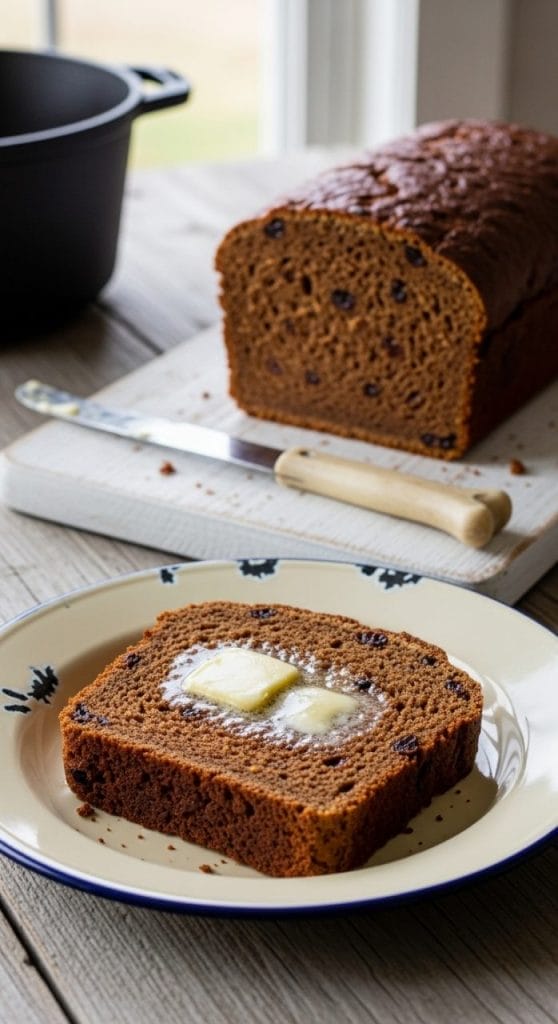
Crusty bread is mandatory. Colonial households served it with a slab of cornbread or a wedge of biscuit, anything that could soak up the spicy broth.
For a full historical meal, pair it with a glass of cider and a small dish of pickled vegetables. The acidity cuts through the richness.
How to Store and Reheat
Pepper pot soup actually tastes better the next day. The flavors deepen overnight in the fridge.
Store in an airtight container for up to 4 days in the fridge or 3 months in the freezer. Reheat gently on the stove with a splash of water if it has thickened too much.
Frequently Asked Questions
What is pepper pot soup made of?
Beef or tripe, root vegetables (carrots, potatoes, turnips), onion, garlic, hot pepper, beef broth, thyme, and allspice. The colonial American version often included dumplings or torn bread for thickening.
Is pepper pot soup spicy?
Yes, but adjustably so. The traditional recipe uses one whole hot pepper, but you can scale up or down. The heat builds slowly and warms rather than burns.
Why was pepper pot soup important in the Revolutionary War?
It is said to have sustained Washington’s army at Valley Forge during the brutal winter of 1777-78. A Continental Army cook supposedly invented it from scraps when supplies ran low. The story made the soup a symbol of American resilience.
Can you make pepper pot soup without tripe?
Yes. Beef stew meat is the most common modern substitute. Both work. Tripe gives the soup its traditional chewy texture, but stew meat is easier to find and more familiar to most palates.
How long does pepper pot soup last?
Up to 4 days in the fridge in an airtight container, or 3 months in the freezer. The flavors actually improve after the first day, so make a big batch.
Related Colonial Recipes
- Colonial Venison Stew — another one-pot wonder from the same era
- Colonial Era Cornbread — the classic side for a bowl of pepper pot
- Colonial Hasty Pudding — the breakfast version of cornmeal comfort
- 5 Colonial American Recipes — the full roundup this recipe lives in
Nutrition
Approximate nutrition per serving:
- Calories: 310
- Protein: 22g
- Fat: 12g
- Carbs: 30g
- Fiber: 5g
- Sugar: 3g
- Sodium: 600mg

Maggie Hartwell
Hi there, I’m Maggie Hartwell, but you can call me Maggie—the apron-clad foodie behind Classic Fork! I created Classic Fork because I’m convinced food has a way of telling stories that words can’t. So, grab a fork and dig in. The past never tasted so good!