
Home > Single Recipes > Treacle Bread So Good Even Queen Victoria Might’ve Asked for Seconds
Last Updated: July 5, 2026
Classic Fork earns a small commission from Amazon and other affiliate links at no extra cost to you, helping us keep our content free and honest.
Treacle Bread So Good Even Queen Victoria Might’ve Asked for Seconds
Time Period:
Meal Type:
Cooking Time: 35 minutes
Prep Time: 10 minutes
Total Time: 45 minutes
Servings: 10 slices
Calories: ~220 per slice
Treacle bread was the bread you baked when guests showed up unexpectedly. No yeast. No proofing. No two-hour wait. Just mix, pour, bake.
I made this on a weeknight thinking it would be the soda bread equivalent of a backup plan. It turned out so good that I made another one the next day.
Dark, slightly sticky, mildly sweet. Eat it warm with butter or sharp cheese.
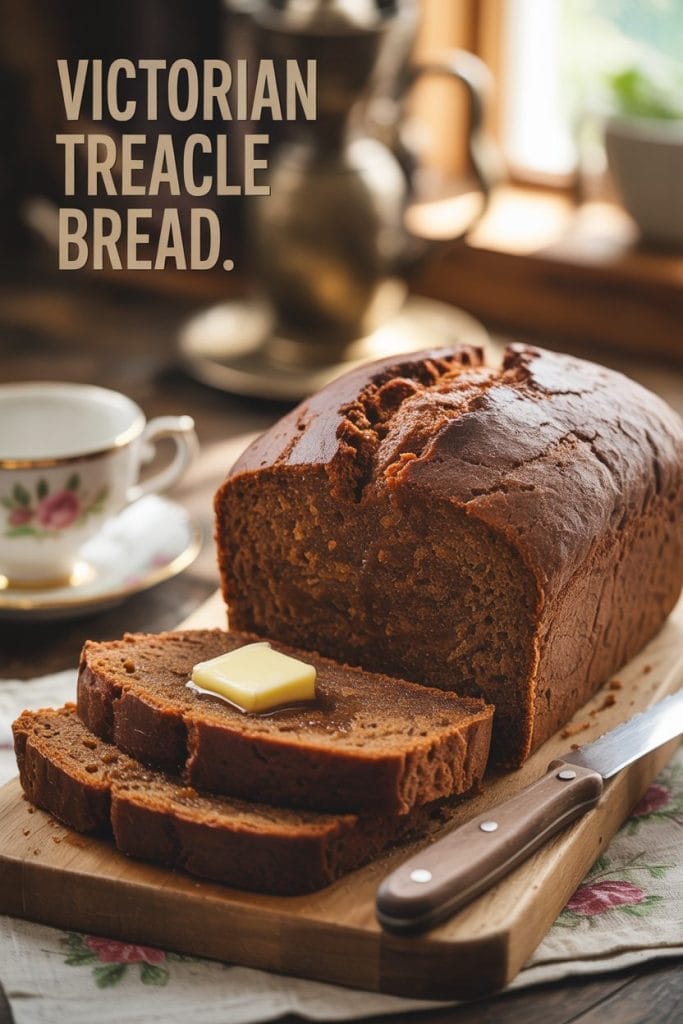
What Is Treacle Bread?
Treacle bread is a quick soda bread sweetened with black treacle (or molasses (Grandma's Unsulphured is the only kind I trust)), leavened with baking soda instead of yeast, and baked in under 40 minutes. It is dense, dark, and slightly sticky.
Unlike yeasted breads, it requires no rise time. The acid in buttermilk or treacle reacts with baking soda to create the lift.
A Quick History of Treacle Bread
Treacle bread comes from working-class Victorian kitchens in Ireland, Scotland, and northern England. Yeast was expensive and unreliable, but baking soda was cheap and arrived in every kitchen by the mid-1800s.
Black treacle, a byproduct of refining sugar, was abundant and inexpensive. Combined together, they gave families a way to bake fresh bread without yeast or skill.
It was especially common in rural Ulster, the north of England, and the Scottish Borders. Some households baked it daily. Others kept it for tea time, when guests arrived without warning.
The Victorians loved it because it filled bellies fast and stayed fresh for several days, even in unheated pantries.
Times and Yield
- Prep time: 10 minutes
- Bake time: 30-35 minutes
- Total time: 45 minutes
- Yield: 1 loaf (~10 slices)
- Difficulty: Beginner
Equipment
- Mixing bowl (this Pyrex glass set has been on my counter forever)
- Measuring cups (this Pyrex glass set has held up for years) and spoons
- Wooden spoon (this beech-wood set has lasted me a decade) or spatula
- Standard loaf tin (8×4 or 9×5 inch)
- Oven
Ingredients
- 2 cups plain (all-purpose) flour
- 1 tsp baking soda
- ½ tsp salt
- 1 tsp ground ginger (optional but traditional)
- ¾ cup buttermilk (or whole milk)
- ½ cup Lyle’s black treacle or unsulphured molasses
- 1 tbsp brown sugar (optional, for extra sweetness)
Instructions
Step 1: Preheat the Oven
Set your oven to 350°F (180°C). Lightly grease your loaf tin or line it with parchment.
Step 2: Mix the Dry Ingredients
In a large bowl, whisk (this OXO balloon whisk takes a beating) together the flour, baking soda, salt, and ginger.
Make sure the baking soda is evenly distributed. Pockets of soda will leave bitter bites.
Step 3: Warm the Treacle
Pour the treacle into a small bowl and microwave for 10 seconds, or warm gently over a pot of hot water.
Warm treacle pours easily and incorporates without lumps. Cold treacle will fight you.
Step 4: Combine
Add the warm treacle, buttermilk, and brown sugar (if using) to the dry mix. Stir gently until just combined.
Do not overmix. The batter should be thick and rough, not smooth.
Step 5: Pour and Smooth
Spoon the batter into the loaf tin. Use the back of a spoon to roughly level the top.
Step 6: Bake
Bake for 30 to 35 minutes. A skewer in the center should come out clean.
The top should be deeply browned and slightly cracked.
Step 7: Cool and Slice
Let it rest in the tin for 10 minutes, then turn out onto a wire rack (this Wilton 3-tier rack saves my counter on bake days).
Slice when fully cooled for clean cuts, or eat warm if you cannot wait.
Tips and Troubleshooting
- Bitter aftertaste? The baking soda was not mixed evenly. Whisk it more next time.
- Tough crumb? You overmixed. Stir just until the dry ingredients disappear.
- Did not rise? Old baking soda. Replace yours every 6 months.
- Wet middle? Bake another 5 minutes. Treacle bread can take a bit longer than wheat soda bread.
Variations Worth Trying
- Wholemeal version: Swap half the white flour for wholemeal for a heartier, more rustic loaf.
- Spiced: Add ½ tsp cinnamon and ¼ tsp ground cloves alongside the ginger.
- Fruity: Stir in ⅓ cup raisins or sultanas.
- Oat-topped: Sprinkle rolled oats on top before baking for visual texture.
How to Serve It
The Irish way: thick slice, generous spread of salted butter, hot black tea on the side.
The Yorkshire way: paired with sharp cheddar cheese. The treacle’s deep sweetness against the salty cheese is a Victorian flavor combo that still works.
How to Store and Reheat
Wrap in parchment or store in an airtight container at room temperature for up to 3 days. The crumb stays moist thanks to the treacle.
To freeze, slice and wrap individually. Toast slices straight from frozen.
Frequently Asked Questions
What is treacle bread?
A quick Victorian-era soda bread sweetened with black treacle (molasses) and leavened with baking soda. Dense, dark, slightly sticky, no yeast required.
Can I use molasses instead of treacle?
Yes. Use unsulphured molasses for the closest substitute. Avoid blackstrap molasses, which is too bitter for this bread. Lyle’s black treacle is the British original if you can source it.
Is treacle bread the same as gingerbread?
No. Both use treacle, but gingerbread uses butter, eggs, and a generous spice mix. Treacle bread is leaner, less sweet, and unspiced (or only mildly spiced). Treacle bread eats more like bread, gingerbread eats more like cake.
Why is my treacle bread bitter?
Either undistributed baking soda or you used blackstrap molasses. Whisk dry ingredients thoroughly and use unsulphured molasses or actual treacle.
Can I make treacle bread without buttermilk?
Yes. Use whole milk soured with 1 teaspoon of lemon juice or white vinegar. Stir and let it sit for 5 minutes before using. The acid is what activates the baking soda.
Related Victorian Recipes
- Victorian Gingerbread — the spiced, butter-rich cousin
- Victorian Milk Bread — the soft white tea-time loaf
- Victorian Seed Cake Loaf — the caraway-spiked country bread
- 5 Forgotten Victorian Bread Recipes — the full roundup
Nutrition
Approximate nutrition per slice:
- Calories: 220
- Carbs: 42g
- Protein: 4g
- Fat: 3g
- Sugar: 15g
- Fiber: 1g

Maggie Hartwell
Hi there, I’m Maggie Hartwell, but you can call me Maggie—the apron-clad foodie behind Classic Fork! I created Classic Fork because I’m convinced food has a way of telling stories that words can’t. So, grab a fork and dig in. The past never tasted so good!


