
Home > Single Recipes > This Victorian Gingerbread Recipe Is Sticky, Spiced, and Straight Out of the 1800s
Last Updated: April 18, 2026
Classic Fork earns a small commission from Amazon and other affiliate links at no extra cost to you, helping us keep our content free and honest.
This Victorian Gingerbread Recipe Is Sticky, Spiced, and Straight Out of the 1800s
Time Period:
Meal Type:
Cooking Time: 35 minutes
Prep Time: 15 minutes
Total Time: 1 hour
Servings: 10 slices
Calories: Around 280 per slice
Forget the dry holiday cookies. Real Victorian gingerbread is a sticky, dense, molasses (Grandma's Unsulphured is the only kind I trust)-soaked loaf packed with ginger, cloves, and cinnamon.
I tried this recipe out of a 19th-century cookbook on a damp Sunday afternoon. The kitchen smelled like Christmas for hours, and the loaf got stickier and better every day it sat on the counter.
It is not a dessert. It is a full Victorian mood.
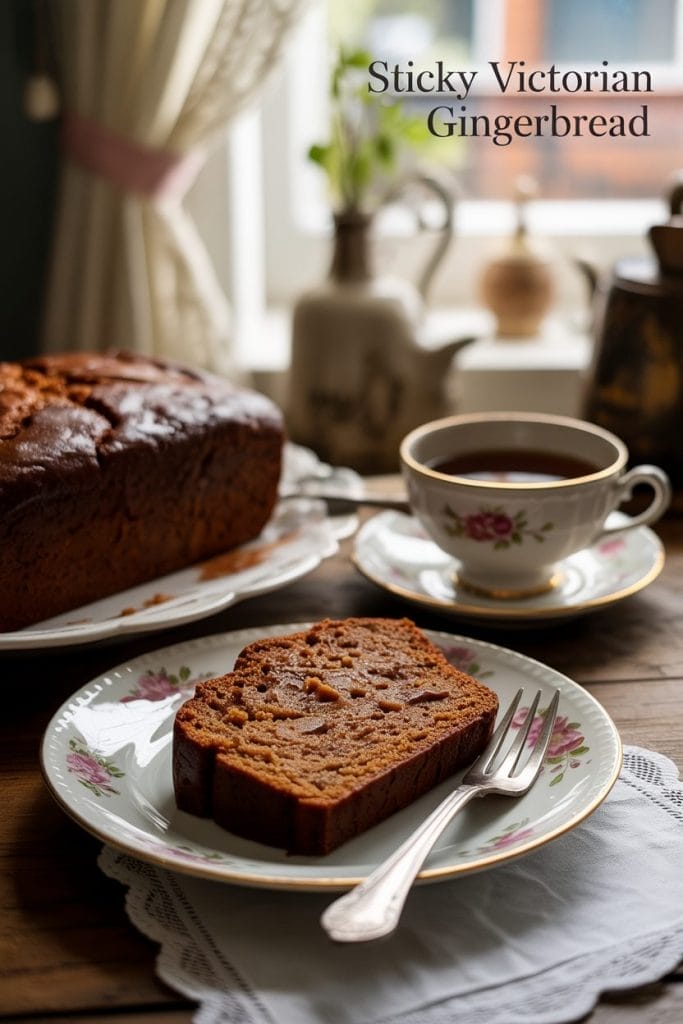
What Is Victorian Gingerbread?
Victorian gingerbread is a dark, dense, sticky loaf cake made with molasses (called treacle in Britain), brown sugar, butter, and a generous mix of warming spices. It bakes into a moist slab that gets even better as it sits.
It is closer to a sticky sponge than a cookie or American “gingerbread cake.” Slice it thick. Eat it with butter, clotted cream, or a wedge of sharp cheddar (yes, really).
A Quick History of Victorian Gingerbread
Gingerbread existed in Britain centuries before Queen Victoria, but the Victorians took it seriously. As trade with the West Indies expanded, treacle and ginger became cheap enough for working-class families to bake at home.
It was sold at fairs, served at church fundraisers, and packed in lunch tins for factory workers in industrial cities like Manchester and Birmingham. The dense, fuel-heavy loaf gave you energy for a full afternoon shift.
Mrs. Beeton’s Book of Household Management (1861) had multiple gingerbread recipes, ranging from “thick gingerbread” loaves to thin ginger biscuits. The thick loaf version is what survived as the iconic Victorian style.
Yorkshire and Lancashire developed regional variations with extra-dark molasses and a kick of black pepper. Ingredients shifted with the family budget: lard for the poor, butter for the comfortable.
Times and Yield
- Prep time: 15 minutes
- Bake time: 35-40 minutes
- Total time: ~1 hour
- Yield: 1 loaf (~10 slices)
- Difficulty: Easy
Equipment
- 2 mixing bowls (this Pyrex glass set has been on my counter forever)
- Wooden spoon (this beech-wood set has lasted me a decade) or whisk (this OXO balloon whisk takes a beating)
- Small saucepan
- 8×4 inch loaf tin
- Parchment paper (Reynolds Kitchens unbleached is what I keep on the shelf)
- Cooling rack (this Wilton 3-tier rack saves my counter on bake days)
Ingredients
- ½ cup unsalted butter
- ¾ cup dark brown sugar, packed
- 1 cup Lyle’s black treacle (or unsulphured molasses)
- 2 cups all-purpose flour
- 2 tsp ground ginger
- 1 tsp ground cinnamon
- ¼ tsp ground cloves
- ½ tsp salt
- 1 tsp baking soda
- ½ cup whole milk
- 1 large egg, lightly beaten
Instructions
Step 1: Melt the Base
In a small saucepan over low heat, melt the butter, brown sugar, and treacle together. Stir constantly until smooth and glossy.
Do not let it boil. Once smooth, pull off the heat and let cool for 5 minutes.
Step 2: Mix the Dry Ingredients
In a large bowl, whisk together the flour, ginger, cinnamon, cloves, salt, and baking soda.
Make sure the spices are evenly distributed. Lumpy spice pockets ruin a slice.
Step 3: Combine Wet and Dry
Pour the warm treacle mixture into the dry mix. Add the milk and beaten egg.
Stir until you get a smooth, thick batter. It should be pourable but not runny.
Step 4: Pour and Bake
Line the loaf tin with parchment paper. Pour in the batter and smooth the top with a spatula.
Bake at 325°F (160°C) for 35 to 40 minutes. A skewer in the center should come out with just a few moist crumbs.
Step 5: Cool and Rest
Let the loaf cool in the tin for 10 minutes, then lift it out using the parchment.
Cool fully on a wire rack. For the best texture, wrap in parchment and leave it on the counter overnight. Yes, overnight. The flavor and stickiness deepen.
Tips and Troubleshooting
- Sunken middle? Likely overmixed or oven temp too high. Stir just until combined and double-check the oven with a thermometer.
- Crust burnt before middle is done? Tent loosely with foil after 25 minutes.
- Not sticky enough? Patience. The stickiness develops over 24 hours as moisture redistributes. Wrap and wait.
- Too dense? Make sure your baking soda is fresh. Old baking soda will not lift this heavy batter.
Variations Worth Trying
- Yorkshire-style: Add ¼ tsp freshly ground black pepper. Surprisingly excellent.
- Date and ginger: Stir in ½ cup chopped dates with the wet ingredients.
- Crystallized ginger: Add ⅓ cup chopped crystallized ginger for chewy bursts of heat.
- Holiday version: Top with lemon glaze (powdered sugar + lemon juice) for Christmas presentation.
How to Serve It
Victorian-style: thick slice with a generous slab of butter and a cup of strong black tea. Some traditionalists add a wedge of sharp cheddar (the British “ginger and cheese” combo).
Modern: with whipped cream and warm poached pears, or alongside a scoop of vanilla ice cream.
How to Store and Reheat
Wrapped in parchment and kept at room temperature, this loaf actually improves over 3 to 5 days. Do not refrigerate. The fridge will dry it out.
For long-term storage, slice and freeze. Thaw individual slices at room temperature in 20 minutes. The texture will be just as sticky as fresh.
Frequently Asked Questions
What is the difference between gingerbread and Victorian gingerbread?
Modern gingerbread is usually a dry cookie or a softer cake. Victorian gingerbread is a dense, sticky loaf made with treacle (molasses), heavy on spices, and meant to be sliced thick and buttered.
Can I use molasses instead of black treacle?
Yes. Use unsulphured molasses for the closest substitute. Blackstrap molasses works but will be slightly more bitter. Lyle’s black treacle is the traditional British original if you can find it.
Why is Victorian gingerbread sticky?
The high sugar content from treacle and brown sugar creates a syrupy interior that develops over 24 hours as moisture migrates. The longer it sits wrapped, the stickier it gets.
Should I eat gingerbread immediately or let it rest?
Let it rest. Victorian gingerbread is one of the few cakes that genuinely tastes better the next day. Bake it Saturday, eat it Sunday and beyond.
Can Victorian gingerbread be made vegan?
Yes. Swap butter for vegan baking butter, milk for oat milk, and the egg for ¼ cup unsweetened applesauce. The texture stays nearly identical.
Related Victorian Recipes
- Treacle Bread — the simpler everyday cousin
- Victorian Milk Bread — the soft white tea-time loaf
- Victorian Seed Cake — the caraway-spiked country loaf
- 5 Forgotten Victorian Bread Recipes — the full roundup this recipe lives in
Nutrition
Approximate nutrition per slice:
- Calories: 280
- Fat: 10g
- Carbs: 45g
- Sugar: 25g
- Protein: 3g
- Fiber: 1g

Maggie Hartwell
Hi there, I’m Maggie Hartwell, but you can call me Maggie—the apron-clad foodie behind Classic Fork! I created Classic Fork because I’m convinced food has a way of telling stories that words can’t. So, grab a fork and dig in. The past never tasted so good!


Thanks to your website I found what I wanted for a gingerbread recipe. I originally found an Isle of Rum recipe, perhaps from my mothers old Mrs Beeton book before it fell apart and it had cloves in it. So I can now redo this favourite of mine. I may find my scribbled version one day but it won’t be as comprehensive as yours here. Julia in Somerset