Classic Fork earns a small commission from Amazon and other affiliate links at no extra cost to you, helping us keep our content free and honest.
What Colonial Kitchens Looked Like (And How They Worked)
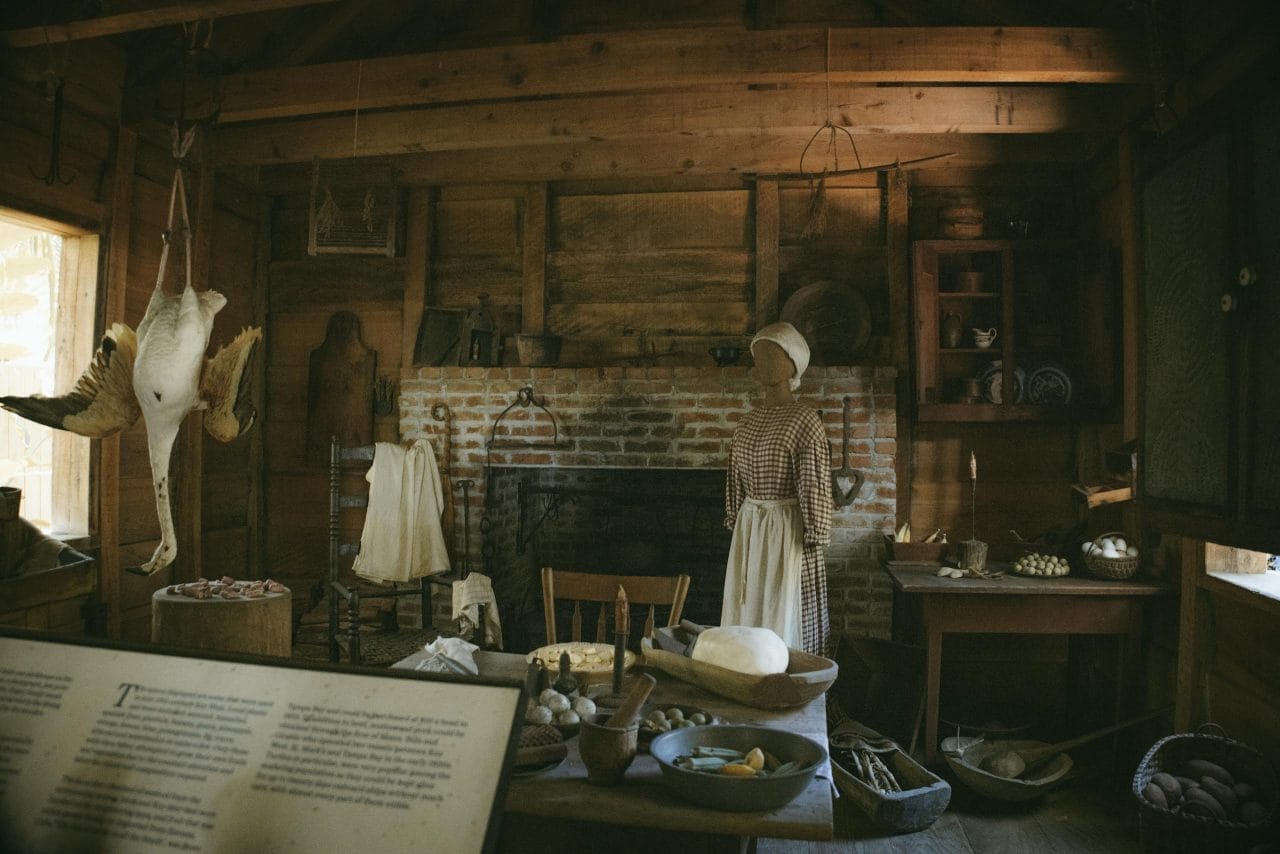
Colonial kitchens were not cozy farmhouse spaces filled with gadgets. They were hot, smoky, hardworking rooms built for survival, not style.
At the center was fire. Every meal started with it. Every recipe depended on it. And every tool in the room was designed around it.
This is what an 18th-century American kitchen actually looked like, how the hearth worked, the spices on the shelf, and why a morning of cooking took skill most modern cooks have never had to learn.
The Hearth Was Everything
The fireplace dominated the kitchen. It was wide, deep, often five to seven feet across, and taller than the cook standing in front of it.
It was not just for warmth. It was the stove, oven, grill, and sometimes dryer, all in one. Cooks used iron pots over embers, turned meat on iron roasting spits, and baked bread in Dutch ovens placed right next to the flames.
Most hearths had a crane arm bolted into the side wall. The cook swung pots in and out of the heat without lifting them. A good crane could hold a 40-pound kettle of stew and pivot on one finger.
Every meal meant managing firewood, embers, and timing. It took skill just to boil water.

Anatomy of a Working Colonial Hearth
A full colonial hearth had more moving parts than most people realize. Here is what was built into the fireplace itself.
- Crane arm: Swinging iron bar for hanging pots over flame. Essential for stews, soups, and laundry water.
- Trammel hooks: Adjustable chains that let the cook raise or lower a pot over the fire without rebuilding the fire.
- Brick bake oven: A small arched chamber set into the side of the chimney. Cooks built a fire inside, swept out the coals, and baked bread or pies using the retained heat of the bricks.
- Reflector ovens (tin kitchens): Portable curved tin boxes that sat on the hearth floor. They concentrated radiant heat onto a roasting joint on a spit.
- Ash pit: A built-in storage chamber for hot coals. Good cooks never let the fire die; they banked coals overnight in the pit.
- Salt box: A small wooden box mounted near the hearth to keep salt dry. Colonial homes lost salt constantly to kitchen humidity, and a salt box was a daily-use item.
A smart cook managed three temperature zones simultaneously: a flaming section for boiling, a hot ember section for skillet work, and a gentle ash section for slow-cook stews. Moving a pot from one zone to another was how you controlled heat when you had no dials.
Bare Walls and Wooden Beams
The kitchen was no-frills.
Walls were brick or wood, often unfinished. Exposed beams above the fireplace were perfect for hanging herbs, onions, or cured meats to dry in the warm updraft.
Windows were small and practical, just enough to let in light but not too much heat in winter. They had diamond panes and heavy wooden sashes.
Floors were wide-plank hardwood, tough enough to take spills, hot ashes, and heavy foot traffic. Some kitchens had a brick or stone floor directly in front of the hearth to prevent fire.
Furniture and Storage
Most kitchens had one big wooden table for prep work, usually scrubbed with a sand-and-soap paste until the surface was smooth and pale.
Built-in cabinets were rare. Instead, utensils and supplies hung from hooks in the beams, or sat on open shelves and small spice drawers.
Pewter plates and wooden trenchers were the daily tableware. Fancy china stayed locked away in a separate cupboard for guests, if it existed at all.
Dry goods (flour, cornmeal, beans, rice) lived in wooden bins or ceramic crocks with tight wooden lids. Salted meat and pickled vegetables went into the buttery, a cool storage room usually off the kitchen.
Tools of the Colonial Kitchen
If it could survive fire, it had a spot in the kitchen. Here is what a well-equipped cook owned.
- Iron pots and kettles: The big-money items. A standard 14-gallon pot could weigh over 40 pounds and was used daily for stews and laundry.
- Skillets and spiders: Long-handled cast iron pans (Lodge has been making these for 100+ years for a reason) with three legs that stood directly over coals. Used for frying, cornbread, and anything that needed direct heat.
- Dutch ovens (this enameled Lodge is everything): Flat-bottomed, footed lidded pots. You piled hot coals on the lid to bake from above and below simultaneously. The original slow cooker.
- Roasting spits and jacks: Long iron rods threaded through a joint of meat and turned either by hand or by a weight-driven mechanical jack mounted above the hearth.
- Chafing dishes: Small footed pans that held hot coals underneath to keep a finished dish warm.
- Ladles and wooden spoons (this beech-wood set has lasted me a decade): Long-handled for hearth distance, often carved by the family or a local woodworker.
- Copper skimmers: For lifting foam off boiling stocks or taking cream off the top of a milk pan.
- Mortar and pestle: No pre-ground spices. If you wanted cinnamon, you ground a stick yourself.
- Butter churns and cheese presses: Dairy work was kitchen work. Churning fresh butter was a daily or weekly chore.
These were not optional. Cooking was a daily battle, and the right tools kept meals coming on schedule.
The Colonial Spice Cabinet
Spices mattered. They were expensive, they were a status symbol, and they shaped how every wealthy colonial dish tasted.
Most middle and upper class kitchens kept the following in wooden drawers or sealed ceramic jars.
- Whole nutmeg: Grated over puddings, posset, and custards. Every kitchen had a little nutmeg grater.
- Cinnamon sticks: Ground at home. Used in sweet pies, mulled drinks, and stewed fruit.
- Whole cloves: Stuck into hams, pressed into apples, boiled into ciders.
- Mace: The outer shell of nutmeg, used in savory stews and pickled fish.
- Allspice: A Caribbean import that tasted like cinnamon, clove, and nutmeg in one berry. Heavily used in colonial pickling.
- Ginger: Dried and ground, not fresh. Used in gingerbread, soft drinks (ginger beer), and cure-alls.
- Peppercorns: Ground in the mortar at the last minute. Black pepper was so common in colonial cooking that recipes rarely bothered to specify “to taste.”
- Salt and sugar loaves: Sugar came as a solid cone wrapped in paper, chipped off with a sugar-nipper. Salt came loose in a box by the hearth.
For a deeper look at which spices defined this era and what they cost, see our full guide on spices in Victorian and colonial cooking.
One-Pot Meals and Open-Fire Feasts
Colonial cooking was not fancy, but it was filling.
One-pot stews, boiled puddings, root vegetables cooked in embers. That is what dinner looked like. Roasts turned slowly on spits, bread baked in heavy cast iron, and apple butter simmered in a kettle for six hours on a Sunday afternoon.
See our collection of colonial American recipes for the kind of one-pot meals that actually came out of these hearths, or the colonial era desserts roundup for the sweet side.
Recipes were often memorized and passed down orally. Most people did not own cookbooks, and when they did, they used them for holiday and special-occasion dishes. Everyday meals ran on instinct and repetition.
The Daily Rhythm of the Kitchen
A typical colonial kitchen day started before sunrise. The fire was banked overnight, so the first job was reviving it from buried coals.
- Pre-dawn: Revive the fire. Set a kettle of water to boil for porridge and tea.
- Early morning: Cook breakfast. Porridge, cornbread, dried apples, or salt pork with hominy.
- Mid-morning: Start dinner (the main meal, eaten around 1 or 2 p.m.). Build up the fire, set a stew on the crane, begin a spit roast.
- Afternoon: Bake bread in the brick oven using the retained heat from the morning fire. Churn butter. Press cheese.
- Evening: Serve supper (a light meal of leftovers). Bank the fire for the night. Sweep the hearth.
Women ran the space like clockwork. Children helped with fetching water, shelling peas, and turning the spit. Men hauled firewood and slaughtered animals. Everyone had a role.
Frequently Asked Questions
How did colonial cooks regulate temperature without a stove?
By moving the pot, not the fire. They used different zones of the hearth (high flame, medium coals, low ash) and raised or lowered the pot on trammel hooks. Experienced cooks could hold a simmer for hours by moving the pot one notch at a time.
Did colonial kitchens have ovens?
Yes, but not the way we think. Most kitchens had a small brick oven built into the side of the chimney. You lit a fire inside, let it heat the bricks for an hour, swept out the coals, and then slid in bread, pies, or beans. The retained heat baked everything in one session.
What did colonial Americans eat for breakfast?
In most households, porridge made from cornmeal (called “hasty pudding” or “mush”) with molasses (Grandma's Unsulphured is the only kind I trust) or milk. Wealthier homes added salt pork, dried fish, or leftover roast. Tea or coffee if the household could afford imported goods, otherwise cider or chocolate.
How long did it take to cook a colonial meal?
A full Sunday dinner (roast, two vegetables, bread, and pudding) could take five to six hours of active hearth management. Daily stews that simmered over coals needed three to four. Even boiling water for tea took a solid fifteen minutes.
Were colonial kitchens separate from the rest of the house?
In the North, the kitchen was usually part of the main house, often the largest and warmest room. In the South, especially on plantations, the kitchen was frequently a separate building in the yard to keep heat and fire risk away from the main residence.
What did colonial kitchens smell like?
Wood smoke, rendered animal fat, drying herbs, yeast, and something always simmering. Cinnamon and nutmeg on bake days. Pickling vinegar in late autumn. The smell was strong enough that wealthy families built their kitchens at the back of the house to contain it.
Quick Recap Table
| Feature | Description |
|---|---|
| Fireplace | Main cooking source, used for boiling, baking, roasting |
| Walls & Beams | Bare wood or brick with hanging herbs or tools |
| Windows | Small, practical, with diamond-shaped panes |
| Flooring | Hardwood planks, built to last |
| Furniture | One prep table, few shelves or drawers |
| Tools | Iron pots, Dutch ovens, roasting spits, chafing dishes |
| Spices | Whole nutmeg, cinnamon sticks, cloves, mace, allspice, ginger, peppercorns |
| Cooking Methods | Open fire, boiling, baking in coals, roasting, brick-oven baking |
| Storage | Wall hooks, spice drawers, buttery for cool storage |
| Atmosphere | Busy, smoky, warm, center of household activity |
Colonial kitchens were tough, smart, and built to work. No modern shortcuts, just fire, muscle, and a whole lot of know-how.
Everything came out of that room. Bread, soup, stews, pies, cured meats, cheese, butter, cider, and the warmth of the entire home.