I Made These FREE Vintage Recipe Tools JUST For You
This recipe was created with help from AI tools and carefully reviewed by a human. For more on how we use AI on this site, check out our Editorial Policy. Classic Fork earns a small commission from Amazon and other affiliate links at no extra cost to you, helping us keep our content free and honest.
Popular Sweets During the American Revolution: What Colonists Actually Ate
Sweets during the American Revolution were luxuries, not staples. By 1775, sugar had become a political symbol almost as charged as tea.

The British taxed it through the Sugar Act of 1764. The First Continental Congress urged colonists to boycott it in 1774. Patriot households turned to molasses (Grandma's Unsulphured is the only kind I trust), maple syrup, and honey. Loyalist households kept buying refined cane.
What people ate after dinner depended entirely on three things: which side they took politically, how close they lived to a port, and what was growing in their orchard. Here is what was actually on Colonial dessert tables between 1775 and 1783.
The Sugar Boycott Changed Everything
The Sugar Act made imported West Indies sugar significantly more expensive. The 1774 Continental Association formalized a colonial boycott of British sugar, tea, and molasses imports unless they came through trusted Patriot trade routes.
Households that supported independence shifted their entire dessert toolkit:
- Maple syrup replaced cane sugar in New England, especially Vermont and upstate New York
- Sorghum and molasses from Caribbean trade (when smuggled past British blockades) became the everyday sweetener
- Honey from kitchen-garden hives carried more weight than it had before
- Dried fruit (apples, pears, plums) provided sweetness without any added sugar at all
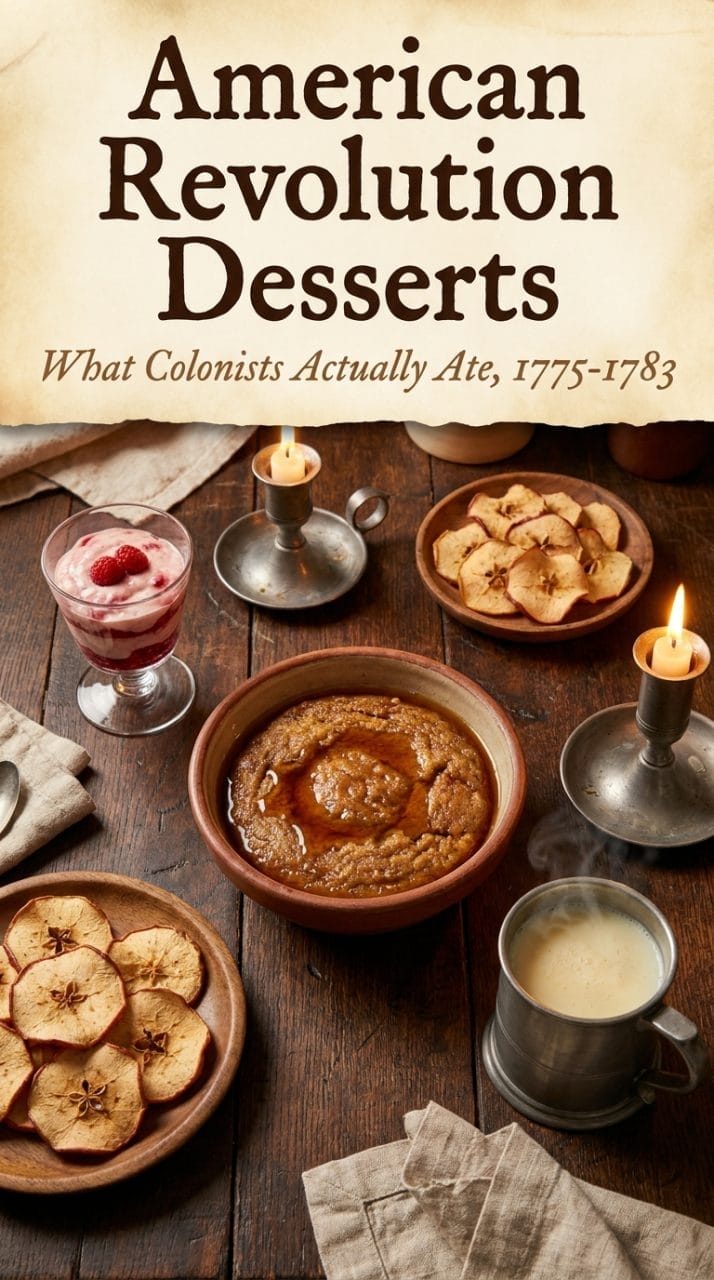
8 Sweets Colonists Actually Ate (1775-1783)
1. Indian Pudding
Cornmeal, milk, molasses, slow-baked. The most common dessert in 1770s New England by a wide margin. Used Patriot-friendly molasses instead of cane sugar, which made it acceptable on every Continental table. Recipe here.
2. Apple Tansey
An eggy, lemony pancake studded with sliced apples. Adapted from English country recipes by Colonial cooks who had unlimited apples and nothing fancier to work with. Sweet but not aggressively so. Recipe here.
3. Pumpkin Pie
The 1777 Thanksgiving standard. Spiced with nutmeg and ginger, sweetened with molasses, baked in a thick lardy crust. Heavier than the modern version. Recipe here.
4. Shrewsbury Cakes
The 18th-century answer to a modern shortbread. Butter, sugar, flour, a splash of rosewater. Stamped flat, baked crisp, served with afternoon tea. Survived the war on Loyalist tables and quietly returned to Patriot ones once the boycotts ended. Recipe here.
5. Fruit Fools
Stewed fruit folded into whipped cream. The lightest dessert in the Revolutionary repertoire. Used whatever the orchard gave up: gooseberries, raspberries, apples, plums. No sugar required if the fruit was ripe. Recipe here.
6. Trifle
Hannah Glasse printed a fully recognizable trifle recipe in The Art of Cookery Made Plain and Easy (1751). By the 1770s, every wealthy Colonial household had a copy of that book and a trifle bowl on the sideboard. Recipe here.
7. Hot Posset
Hot cream curdled with wine, sweetened with sugar, spiced with nutmeg. Served late at night as a sleep aid as much as a dessert. Both Patriots and Loyalists drank it. Recipe here.
8. Hardtack with Molasses

The soldier’s dessert. A Continental Army hardtack biscuit, broken with a bayonet handle, drizzled with molasses from the company stores. Not fancy. Not gourmet. But it was sweet, it filled the gut, and it was what most ordinary soldiers got after a long march.
What the Wealthy Ate (Hancock-Era Banquets)
Founding Father households in Boston, Philadelphia, and Charleston ate considerably better than the average soldier or farmer.
John Hancock, George Washington, and Benjamin Franklin all kept enslaved or hired cooks who served imported pineapple, marchpane (almond paste shaped into elaborate forms), syllabub in long-stemmed glasses, and floating islands of meringue on vanilla custard. Most of these recipes came directly from English cookbooks like Hannah Glasse and Elizabeth Raffald, with very little Colonial adaptation.
Sugar plate (subtleties), gilded almond marchpane, and elaborate jellies set in copper molds were standard centerpieces at Williamsburg state dinners and Philadelphia merchant feasts. See our 18th-century desserts guide for the full lineup.
What the Soldiers Got
Continental Army desserts were almost always one of three things:
- Indian pudding when the company cook had cornmeal and molasses
- A handful of dried apples or plums, eaten dry by the fire
- Hardtack with whatever sweetener was on hand (molasses if lucky, a smear of fat and sugar if not)
Officers ate slightly better, often raiding locally requisitioned farms for fresh apples, pears, and the occasional pie. Enlisted soldiers rarely saw a baked dessert outside of garrison towns.
The Politics of Tea Replaced With Cider
The Boston Tea Party (1773) made British tea politically toxic. Patriot households served hard cider, switchel, beer, and herbal tisanes (mint, sage, raspberry leaf) instead.
Sweet courses got paired with cider rather than tea, which subtly shifted what kinds of desserts worked at the table. Heavy custards stayed. Delicate sponge cakes became less common because hard cider does not sing alongside light cakes the way tea does.
Try Them Yourself
The eight desserts above are all linked to working recipes you can cook tonight. Each one is documented from an 18th-century source and adjusted for a modern oven. The full lineup is in our Colonial-era desserts roundup and Revolutionary War recipes guide.