
Classic Fork earns a small commission from Amazon and other affiliate links at no extra cost to you, helping us keep our content free and honest.
Suet Pudding and the Forgotten Fat: How Suet Ran Every Old Kitchen
Walk into almost any British kitchen before 1950 and someone had a block of suet (Atora is the British classic for steamed puddings) on the counter. Not butter. Not oil. Suet.
It went into puddings, pastries, dumplings, and dripping. It got pressed into candles. It got stored in crocks for the winter. It was the quiet workhorse of the pre-refrigeration pantry.
This guide covers what suet actually is, what a real suet pudding tastes like, how to render it at home, and why it refuses to stay forgotten.
What Is Suet?
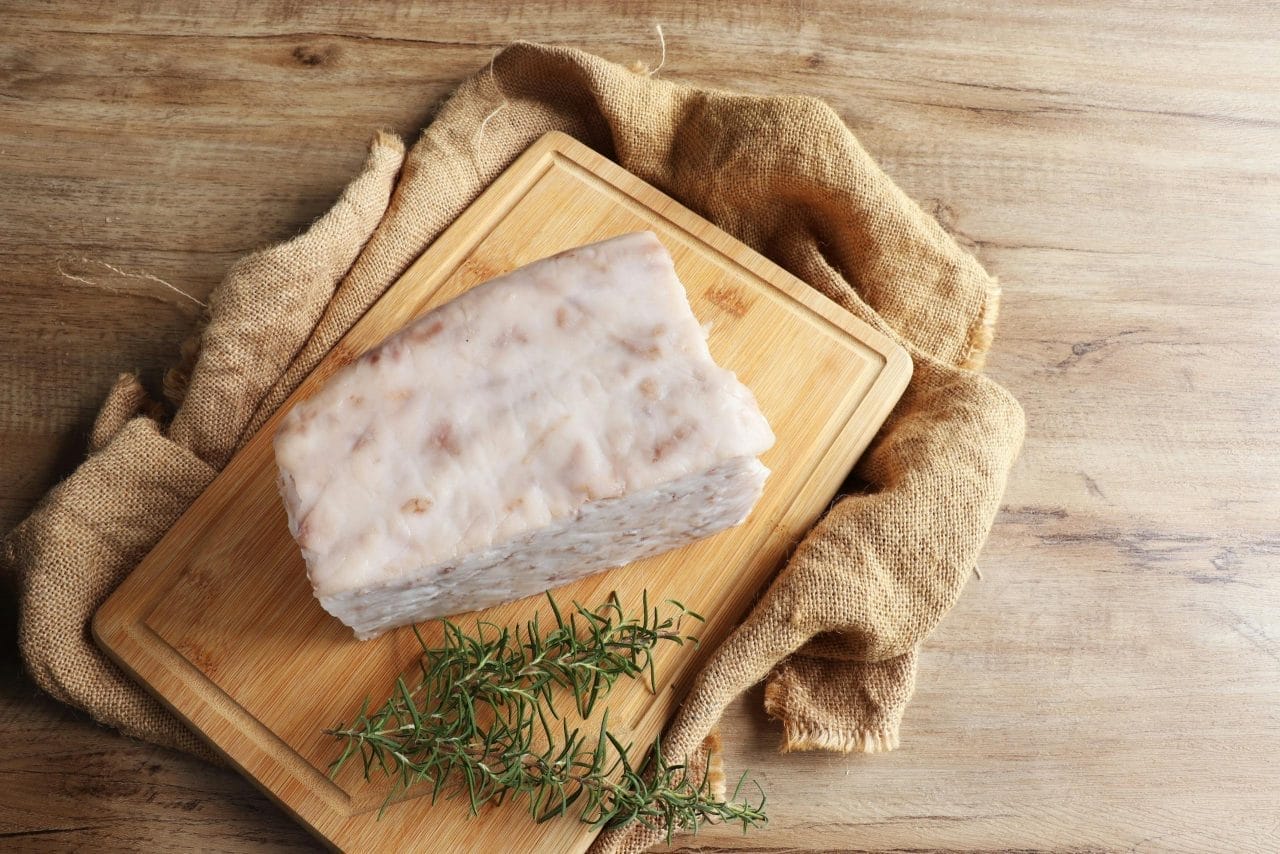
Suet is the hard, crumbly fat that surrounds the kidneys and loins of beef or mutton. It’s whiter and firmer than the subcutaneous fat under the skin, and it melts at a higher temperature.
That high melting point is the whole reason cooks loved it. Butter melts as soon as it touches warm batter. Suet holds its shape through mixing and only releases during cooking, which creates pockets of steam and a tender, light crumb.
Most modern UK home cooks buy shredded beef suet in boxes because the shredded form mixes straight into flour with no prep. Old-school cooks started with a block from the butcher and chopped it themselves.
What Is a Suet Pudding?
A suet pudding is a steamed or boiled dumpling made from flour, suet, and liquid, wrapped in cloth or pressed into a basin, and cooked in simmering water for hours.
The suet is the structure. As the pudding steams, the fat melts into the flour and leaves behind a tender, almost cake-like interior with a faintly chewy outer skin.
The dough is simple. Flour, suet, a pinch of salt, baking powder if you want lift, and enough cold water to bring it together. That’s the base. What you wrap around it decides whether it’s dinner or dessert.
Savory Suet Puddings
Steak and kidney pudding is the icon here. A suet crust lines a basin, gets filled with slow-cooked beef and kidney in thick gravy, sealed with a suet lid, and steamed for four or five hours.
The gravy soaks into the crust. The crust swells. You end up with a pudding that’s part pastry, part stew, eaten with a spoon.
Sweet Suet Puddings
Spotted dick, jam roly-poly, Christmas pudding, treacle sponge. All built on suet dough, all steamed for hours.
Sweet versions get sugar, dried fruit, and warming spices folded into the dough. Treacle, golden syrup, or jam goes on before rolling. The steaming time stays long because the fat needs heat to fully break down and bind the crumb.
How to Make a Suet Pudding From Scratch
If you have never made one, the method is less scary than the four-hour cooking time suggests. The dough comes together in ten minutes.
- Sift 250g self-raising flour into a bowl with a pinch of salt.
- Stir in 125g shredded beef suet until the mix looks like coarse breadcrumbs.
- Add cold water one tablespoon at a time, bringing the dough together with a round-bladed knife. Stop as soon as it clumps.
- Knead once or twice on a floured surface. Do not overwork it.
- Roll out, shape around your filling, and press into a greased ceramic pudding basin.
- Cover with greased parchment and a double layer of foil, tied with string.
- Lower into a large pot of simmering water that reaches halfway up the basin. Cover and steam for three to five hours, topping up water as needed.
For a full working recipe with colonial-era seasoning, see our colonial suet pudding recipe.
How to Render Suet at Home
Rendering turns a raw block of kidney fat into clean, shelf-stable cooking fat (tallow). It is slow, simple, and makes your kitchen smell like a Sunday roast.
- Start with a fresh block of beef or mutton kidney fat from a butcher. Trim off any stray meat and the papery membrane.
- Chop into small dice, or pulse in a food processor until coarse. Smaller pieces render faster.
- Place in a heavy pot over the lowest possible heat. A cast iron dutch oven (this enameled Lodge is everything) works perfectly.
- Stir occasionally. Over two to three hours, the fat melts out and the remaining solids (cracklings) sink and brown.
- Strain through a fine sieve or cheesecloth (this organic cotton roll lasts me months) into a clean jar. The liquid sets into pure white tallow as it cools.
Stored in a sealed jar in a cool pantry, rendered tallow keeps for months. Refrigerated, it lasts nearly a year.
Dumplings and Everyday Stews
Suet dumplings are the low-effort cousin of suet pudding. Same dough, rolled into balls, dropped straight onto a simmering stew for the last twenty minutes of cooking.
They puff up, soak up gravy, and turn a thin meat stew into a full meal. In wartime kitchens this was the trick for stretching half a pound of beef into supper for six.
Tallow, Candles, and Everything Else
Suet was never just food. Rendered tallow replaced oil for frying and roasting, especially where olive oil was a luxury and butter spoiled too quickly.
It also made candles, soap, and leather dressing. For the wartime rendering side of things, see from lard to dripping: wartime fat hacks explained.
Why Suet Mattered
Suet came with the meat. It did not spoil the way butter did. It stored without refrigeration, burned cleanly, and made meals feel substantial.
In rural cottages and colonial kitchens, that mattered. A household could buy one joint of beef, render the fat, save the tallow, and use every part for weeks afterward.
The puddings it produced are still hard to match. No modern fat behaves quite the same way in a long steam.
Frequently Asked Questions
What does suet pudding taste like?
A well-made suet pudding tastes mildly beefy and deeply savory in savory versions, soft and sponge-like in sweet ones. The suet itself disappears into the crumb and leaves almost no greasy aftertaste.
Can you substitute butter for suet?
Not one-for-one. Butter melts too early in the cook and the pudding collapses. Frozen grated butter gets closer, or you can use vegetarian suet made from palm oil and rice flour.
How long does a traditional suet pudding take to cook?
Three to five hours of gentle steaming, depending on size. A small 500ml pudding needs about three hours. A full-size steak and kidney pudding needs four and a half or more.
Is suet the same as lard?
No. Suet is raw kidney fat from beef or mutton. Lard is rendered pork fat. They behave differently in the oven. Suet holds shape; lard spreads and flakes pastry.
Where can I buy real suet today?
British and Irish supermarkets carry boxed shredded suet year-round. In the US, a good independent butcher will sell fresh kidney fat by the pound if you ask. Online, shredded Atora suet ships internationally and keeps for months.
What is the difference between suet and tallow?
Suet is the raw fat. Tallow is what suet becomes after you render it. Tallow is clean, shelf-stable, and pourable when warm. Suet is crumbly and has to be used in recipes that rely on its hard texture.